Water Management & Agri-Contracting in Christchurch: The Farmer’s Guide
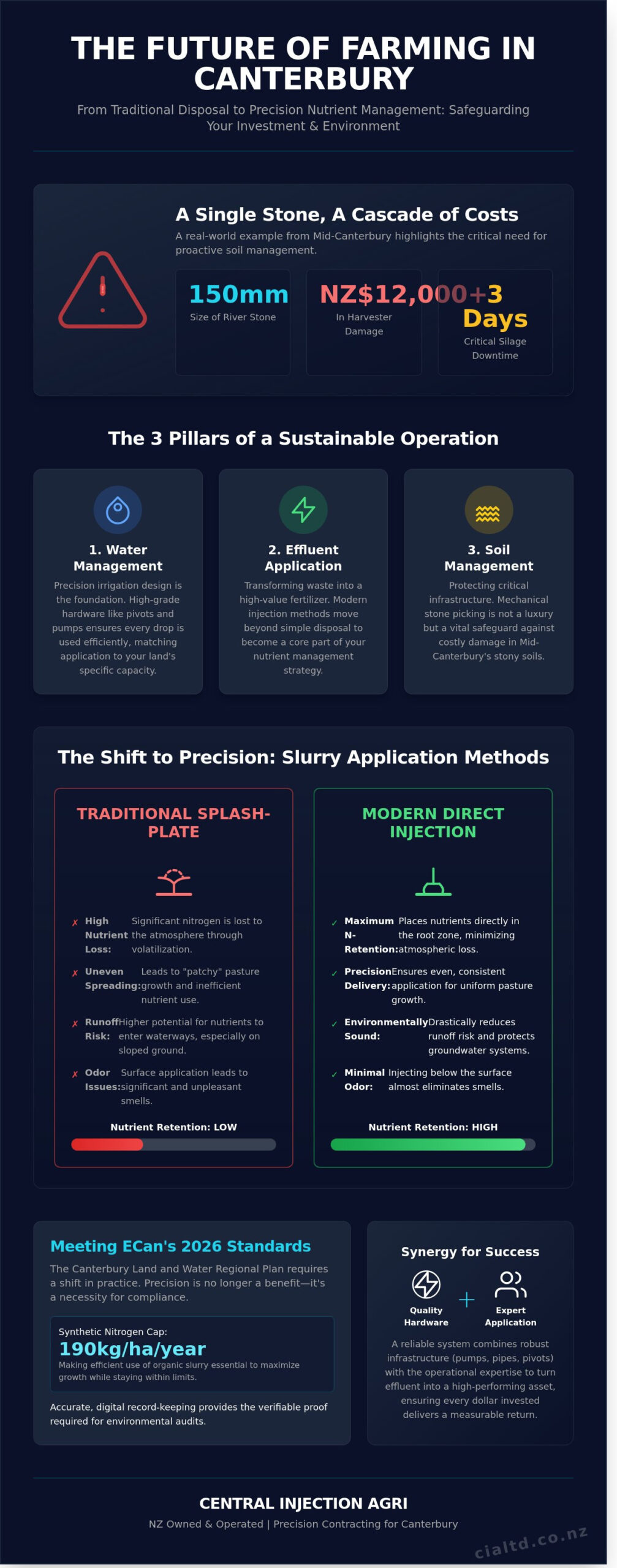
Last October, a single 150mm river stone caused over NZ$12,000 in damage to a high-capacity harvester in Mid-Canterbury, halting silage production for three critical days. Managing a productive farm in this region requires more than just luck; it demands integrated systems like those supported by waterforce chch to ensure every drop of water and effluent works for your bottom line. We approach agricultural contracting with a focus on reliability and technical precision, treating Water, Effluent, and Soil Management as the three essential pillars of a sustainable operation.
You already know that meeting strict regional nitrate limits isn’t optional, and relying on outdated splash-plate spreading often leads to uneven nutrient delivery and wasted potential. This guide shows you how to integrate professional water systems with precision effluent application and mechanical stone picking to safeguard your farm’s infrastructure. We examine the technical shift from traditional disposal to precision nutrient management and the specific machinery upgrades needed to maintain environmental standards while maximizing pasture growth across the Canterbury Plains.
Key Takeaways
- Learn how to bridge the gap between high-quality hardware, such as a waterforce chch system, and the practical pond management required for efficient Canterbury farming.
- Discover why professional stone picking is a critical safeguard for your infrastructure, preventing costly damage to pivots and harvesters in Mid-Canterbury’s stony soils.
- Understand the science of direct slurry injection and how it maximizes nitrogen retention and nutrient uptake compared to traditional splash-plate spreading.
- Identify the essential standards for selecting a reliable, NZ-owned agri-contractor to ensure local accountability and high safety standards for your farm operations.
Navigating Water and Effluent Management in Canterbury
Managing water and effluent in Mid-Canterbury requires a disciplined approach to both engineering and biology. The process begins with precise irrigation design, often facilitated by specialists like waterforce chch, and ends with the tactical application of nutrients in the paddocks of Ashburton. This ecosystem relies on a seamless connection between high-grade hardware and on-the-ground operational expertise. A pump is only as effective as the strategy behind its use, and we understand that reliability is the foundation of any successful farming operation.
Mid-Canterbury soil profiles, such as the Lismore stony silt loams found across 40% of the region, present unique challenges for effluent management. These soils have high drainage rates; this makes precision vital to prevent valuable nutrients from bypassing the root zone. Local knowledge ensures that slurry and water application matches the specific water-holding capacity of your land. This technical authority is essential for mitigating agricultural pollution in Canterbury, as poorly timed applications lead to direct losses into the groundwater systems.
Reliability in this sector isn’t just about showing up; it’s about the integrity of the data provided to Environment Canterbury (ECan). The partnership between hardware providers, like waterforce chch, and operational contractors ensures that every litre of effluent is accounted for. This integrated approach combines robust pumps and pivots with specialized injection machinery to deliver a bespoke nutrient solution. We focus on building long-term trust by ensuring that your hardware and your application methods work in perfect synchronization, reflecting a true New Zealand owned and operated commitment to quality.
The Shifting Landscape of Canterbury Farming
Intensive dairy operations in Rakaia and Ashburton have fundamentally changed regional water requirements over the last 15 years. Farmers have moved away from traditional border-dyke systems toward highly efficient spray irrigation and integrated nutrient management. The local standard for reliability is simple: get the job done right the first time. This straightforward attitude reflects a deep commitment to the local building and farming landscape. We prioritize safety and stability in every project, ensuring your infrastructure supports long-term growth while protecting the natural environment.
Meeting Regulatory Standards in 2026
By 2026, Canterbury farmers must meet even stricter nitrogen leaching limits under ECan’s Land and Water Regional Plan. Current regulations often cap synthetic nitrogen use at 190kg per hectare per year; this makes the even distribution of organic slurry a necessity for compliance rather than just a benefit. Specialized injection machinery ensures that nutrients are placed exactly where they are needed, reducing the risk of runoff. Accurate record-keeping is the backbone of this process. Digital logs provide the proof required during audits, showing that your spreading schedule aligns with environmental benchmarks and regional nitrogen caps.
Infrastructure vs. Application: Why Hardware is Only Half the Battle
A reliable effluent system relies on two distinct pillars: the hardware that moves the liquid and the method used to apply it. Irrigation installers provide the essential skeleton of your farm’s nutrient management. They focus on flow rates and pipe pressures. However, an agricultural contractor brings the expertise needed to turn that waste into a high-performing fertilizer. Even a top-tier waterforce chch installation requires a disciplined approach to application to reach its full potential. Without this synergy, you’re simply moving liquid rather than managing a resource.
The distinction between infrastructure and application is often where efficiency is lost. A system designed by waterforce chch ensures your farm meets hydraulic requirements, but the biological success of the pasture depends on how that slurry is injected. We see this as a partnership between engineering and agronomy. Reliable hardware provides the foundation; precision application delivers the results. This integrated approach mirrors our core values of integrity and high standards, ensuring every NZ$1 spent on infrastructure yields a measurable return in pasture growth.
Pond Stirring: Preparing the ‘Fuel’ for Your System
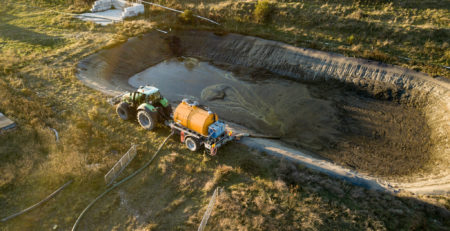
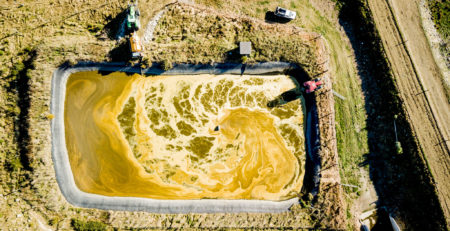
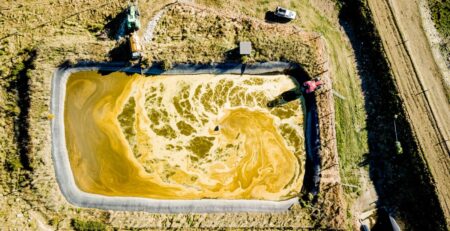
Think of your effluent pond as a fuel tank. If the fuel is contaminated or separated, the engine won’t run. Homogenizing slurry through thorough pond stirring prevents the heavy solids from settling at the bottom and forming a thick crust at the top. This process is about physics. Breaking up the crust ensures that the pump draws a consistent, liquid consistency. This prevents blockages and reduces mechanical wear on internal components by up to 25%.
Relying on a contractor who understands Good Management Practices for farm effluent is essential for long-term pump health. While some farmers look at hourly rates for stirring, the real value lies in the reduction of maintenance costs. A well-stirred pond allows the pump to operate at peak efficiency, preventing the cavitation that leads to expensive repairs. Investing in 4 hours of intensive stirring can save over NZ$3,800 in pump seals and downtime over a single season. It’s a proactive strategy that keeps your system running seamless and steady.
Bridging the Gap Between Design and Dirt
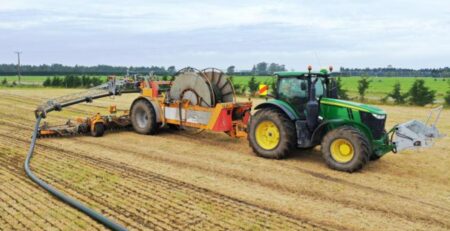
A professional layout needs a professional applicator to succeed. Integrating Vervaet injection technology with your existing pivot or K-line systems allows for a bespoke nutrient plan. While pivots are excellent for broad application, direct injection places nutrients exactly where the roots can access them. This reduces nitrogen leaching and prevents the odor issues often associated with splash plate spreaders. It’s a clean, quiet, and highly efficient way to manage farm waste.
In a 2023 case study conducted on a 400-hectare Mid-Canterbury dairy farm, precision effluent placement resulted in a 21% reduction in synthetic fertilizer costs. By accurately mapping the nutrient density of the injected slurry, the farm manager could skip the first round of urea application on 150 hectares. This level of detail transforms effluent from a compliance headache into a strategic asset. For those looking to optimize their current setup, a professional assessment can identify the specific gaps in your application strategy. Our commitment to excellence ensures that your farm infrastructure works in perfect harmony with the local landscape.
Protecting Your Investment: The Critical Role of Stone Picking
Mid-Canterbury’s alluvial plains are notorious for their high stone content, a byproduct of the region’s glacial history. In Ashburton, these stones represent the single greatest physical threat to high-value farm machinery. A single rock ingestion can trigger repair bills exceeding NZ$15,000 for a modern harvester or mower. It’s about protecting the capital you’ve already invested in your fleet. When you integrate a waterforce chch irrigation strategy, a level, stone-free surface is essential to prevent tower stalling or structural fatigue on the pivot spans.
The Hidden Costs of Surface Stones
Surface rocks do more than just dent steel; they degrade the efficiency of your entire operation. A 2022 survey of Canterbury contractors revealed that 18% of all downtime during the silage season resulted directly from rock damage. Beyond mechanical failure, stones severely impact soil health by creating air pockets that disrupt seed-to-soil contact. In arable rotations, this poor contact can reduce germination rates by as much as 12% across a paddock. Removing stones is the foundation for all other land management. It ensures that when you apply slurry or water, the distribution remains uniform across a consistent soil profile.
- Equipment Longevity: Reducing vibration and impact stress extends the service life of disc mowers by 25%.
- Harvest Efficiency: Stone-free paddocks allow for lower cutting heights, capturing an additional 500kg of dry matter per hectare in high-yield crops.
- Irrigation Safety: Eliminating large rocks prevents the “bogging” of pivot tires, which is a common cause of irrigation downtime in the Ashburton district.
Rock Raking vs. Picking: Choosing the Right Method
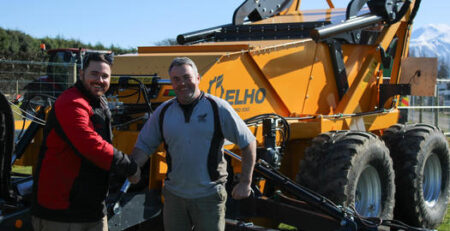
Farmers in Mayfield and Mt Somers often face heavier rock loads due to their proximity to the foothills. While traditional rolling was once the standard, it simply pushes the problem 100mm underground. Those stones inevitably work their way back to the surface during the next frost cycle. Rock raking serves a purpose for windrowing smaller debris, but for total removal, precision picking is the superior choice. We utilize the ELHO Scorpio, a machine designed for the toughest New Zealand conditions. It uses high-tensile steel tines and a hydraulic drive to lift rocks between 25mm and 400mm in diameter, clearing the land permanently rather than hiding the hazard.
The ELHO Scorpio advantage lies in its ability to separate soil from stone effectively. Unlike older mechanical pickers that take valuable topsoil with them, the Scorpio’s screening system returns the fines to the paddock. This precision ensures you aren’t stripping your land of its most productive layers while clearing the obstructions. It’s a proactive, safety-conscious approach that mirrors the standards required by waterforce chch systems for optimal ground-level performance.
Calculating the ROI of a stone-free paddock involves looking at long-term gains. In the Ashburton region, a professional stone-picking service typically pays for itself within 24 months through three specific channels:
- Reduced Maintenance: Saving an average of NZ$4,500 per year in avoided blade replacements and rotor repairs.
- Increased Yield: Lower cutting heights in Lucerne and permanent pasture increase harvested biomass by approximately 7% per cut.
- Contractor Rates: Many local contractors offer discounted rates for paddocks certified as stone-free, as it reduces their own insurance and breakage risks.
Safety remains a core pillar of our land clearing process. Canterbury farms are workplaces where precision and reliability matter. By removing surface stones, you create a safer environment for staff operating high-speed machinery and reduce the risk of projectile damage to nearby infrastructure. We treat every hectare with the same level of technical authority we apply to our construction projects, ensuring the job is done right the first time.
Direct Slurry Injection: The Future of Nutrient Application
Traditional splash-plate spreading is becoming a relic of the past in Canterbury. It’s inefficient and wasteful. When you spray slurry into the air, you lose up to 80% of the available ammonia nitrogen to the atmosphere within 48 hours. Direct injection changes the math. By placing the liquid 50mm to 100mm below the surface, we lock those nutrients into the root zone immediately. This process cuts nitrogen volatilisation by over 90%, ensuring the fertiliser you paid for actually grows grass. It’s a straightforward approach that prioritises performance over convenience.
Odour control is another critical factor for farms near Christchurch and Rangiora. Surface spreading often leads to complaints from lifestyle block neighbours. Injection technology solves this by sealing the effluent underground instantly. It reduces surface smell by roughly 85% compared to old-fashioned methods. We use precision GPS mapping to track every litre applied. You receive a detailed digital report showing exactly where the nutrients went, which simplifies your Farm Environmental Plan (FEP) audits. Whether you’re coordinating with waterforce chch for pump maintenance or planning your next effluent pond empty, our team works around your schedule to get the job done right.
The Vervaet Advantage for Mid-Canterbury Dairies
High-volume dairy operations require gear that can move fast without destroying the soil. We utilise Vervaet machinery because it’s designed for low ground pressure. Even when fully loaded with 20,000 litres, these machines exert less than 1.2kg per square centimetre on your paddocks. This prevents the heavy compaction that stunts clover growth and reduces drainage. Our per-hectare pricing model, typically between NZ$225 and NZ$340, provides the transparency you need for seasonal budgeting. Low-emission spreading isn’t just a trend; it’s the 2024 industry standard for sustainable farming in the region.
Compost and Muck Spreading for Soil Structure
Liquid slurry is only half the story. Canterbury’s light, stony Lismore soils often lack the organic glue needed to hold moisture. Spreading solid compost or muck adds essential carbon back into the system. A 1% increase in soil organic matter allows the ground to hold up to 180,000 additional litres of water per hectare. We manage both solid and liquid waste with specialised gear, ensuring the right tool hits the right paddock. Timing is vital for success. We schedule applications during the spring and autumn growth flushes to maximise plant uptake. Integrating these application methods with reliable irrigation systems from waterforce chch ensures your pasture receives both the nutrients and the hydration it needs to thrive.
Ready to upgrade your farm’s nutrient efficiency? Contact our team today for professional nutrient management solutions that deliver measurable results.
Choosing a Reliable Agri-Contractor in Ashburton
Selecting a contractor in Mid-Canterbury requires more than a quick search; it demands a partner who understands the specific soil profiles of the Canterbury Plains. Being New Zealand owned and operated provides a layer of accountability that offshore-owned entities often lack. You’re dealing with locals who stand by their work because their reputation is tied to the success of your next harvest. Local ownership means the team is familiar with regional council regulations and the environmental standards specific to the Ashburton District, ensuring every application remains compliant.
Before signing a contract, you should ask direct questions about a contractor’s fleet and safety protocols. Inquire about the age of their machinery and their maintenance schedules to avoid costly downtime on your property. A professional contractor should provide clear documentation regarding their adherence to the Health and Safety at Work Act 2015. You need to know that the operators entering your gate are fully trained and that their equipment is fitted with the latest GPS technology for precision application. This transparency is the foundation of a reliable service.
Effective farm management relies on a partnership approach rather than a series of one-off transactions. When a contractor understands your land’s history and your long-term goals, they can provide better advice on nutrient timing and soil health. This collaborative effort often involves coordinating with other local specialists, such as the experts at waterforce chch, to ensure that slurry injection and irrigation schedules are perfectly synchronized. This level of integration ensures that liquid nutrients are applied when the soil is most receptive, preventing runoff and maximizing pasture uptake.
Working with a dedicated team allows for better resource planning across the season. While some may look for the lowest possible price, savvy farm managers look for value and reliability. A contractor who understands the synergy between your irrigation systems and your effluent management, much like the technical teams at waterforce chch, helps you build a more resilient farm infrastructure. This holistic view of farm operations is what separates a standard service provider from a true agricultural partner.
The CIA Commitment to Craftsmanship
Central Injection Agri (CIA) operates with a “get the job done right” philosophy that resonates across Ashburton and the wider Canterbury region. Our specialized fleet, featuring ELHO stone pickers and Vervaet trike injectors, sets us apart from standard contractors. These machines are designed for high-capacity work while maintaining low ground pressure to protect your soil structure. We build long-term trust through a transparent pricing model, offering both hourly and per-hectare rates so you can manage your budget with total clarity. Our focus is on precision, ensuring every liter of slurry is placed exactly where it will do the most good.
Next Steps for Your Farm Infrastructure
Scheduling your seasonal requirements in advance is the best way to ensure your farm stays on track. We recommend booking a consultation at least 4 to 6 weeks before your peak period to secure your place in our Mid-Canterbury rotation. Whether you need stone picking to safeguard your harvesting equipment or precision slurry injection to reduce your reliance on synthetic fertilizers, our team provides the technical expertise you need. Planning ahead allows us to integrate our services seamlessly with your existing farm schedule. Contact Central Injection Agri for expert contracting solutions to discuss your specific needs for the coming season.
Securing Your Farm’s Productive Future
Effective land management in Canterbury hinges on more than just hardware; it requires a technical partner to ensure every hectare performs at its peak. By combining specialised machinery like the ELHO Scorpio stone picker with precision Vervaet slurry injection, you protect your infrastructure and optimise nutrient uptake. Managing your waterforce chch requirements effectively means balancing robust engineering with local soil expertise. We’re proudly New Zealand owned and operated, bringing a specialised fleet to handle the specific challenges of Mid-Canterbury soil. Our focus remains on delivering steady, reliable results that help you meet environmental standards while increasing efficiency. It’s about getting the job done right the first time to safeguard your investment for the seasons ahead. Ready to optimise your operations with a team that understands your ground?
Request a Quote for Your Canterbury Farm
Frequently Asked Questions
What is the difference between WaterForce and an agri-contractor like CIA?
WaterForce focuses on water management and irrigation hardware, whereas CIA specializes in effluent application and nutrient recovery. While many farmers search for waterforce chch to source irrigation parts, we provide the heavy machinery for direct slurry injection to optimize pasture growth. We focus on the practical application of waste as fertilizer, ensuring your soil health meets specific 2024 nutrient targets through precise delivery.
How much does stone picking cost per hour in Ashburton?
Stone picking in Ashburton typically costs between NZ$250 and NZ$350 per hour depending on the specific machinery required for the paddock. This rate covers the tractor, a high-capacity stone picker, and an experienced operator. For a 10-hectare block with moderate stone density, we often complete the job within 5 to 7 hours, which prevents costly repairs to your cultivation equipment and harvesters.
Why is slurry injection better than using a splash plate for effluent?
Slurry injection is superior because it places nutrients directly into the root zone and reduces nitrogen loss through volatilization by up to 80 percent. A splash plate leaves effluent on the surface where it’s exposed to wind and sun, leading to odor issues and nutrient runoff. By injecting the slurry 50mm to 100mm deep, you ensure 95 percent of the nitrogen remains available for plant uptake.
Does Central Injection Agri provide services in Christchurch and Rangiora?
Yes, Central Injection Agri provides full effluent management and stone picking services across the Greater Christchurch and Rangiora regions. We operate a fleet of mobile units that travel throughout North and Mid-Canterbury to service dairy and arable farms. Our team schedules visits to these areas weekly, ensuring local farmers have access to specialized injection technology without long wait times or high travel surcharges.
What is the best time of year for effluent pond stirring in Canterbury?
The best time for effluent pond stirring in Canterbury is during the late winter and early spring months of August and September. Stirring your pond before the primary pumping season ensures that solids are fully suspended and nutrients are evenly distributed across your paddocks. This timing aligns with the peak pasture growth phase, allowing for 100 percent utilization of the organic matter and nitrogen.
How does stone picking help prevent damage to my irrigation pivot?
Stone picking prevents damage to irrigation pivots by removing surface rocks that can puncture tires or cause structural misalignment during movement. A single large stone can cause NZ$2,000 in tire damage or lead to 12 hours of pivot downtime during a dry spell. By clearing stones larger than 50mm, you ensure your irrigation system operates smoothly across the entire 360-degree rotation without mechanical interference.
What specialized machinery do you use for direct slurry injection?
We use specialized 12,000 to 18,000 liter Joskin slurry tankers equipped with multi-disc injectors for our direct application services. These machines feature trailing shoes or discs that slice the turf and deliver effluent directly into the soil profile. This precision equipment allows us to maintain a consistent application rate of 5mm to 10mm per hectare, preventing ponding and maximizing the absorption of vital nutrients.
Are your spreading services compliant with ECan nitrate regulations?
Our spreading services are fully compliant with Environment Canterbury (ECan) Farm Environment Plan (FEP) requirements and nitrate leaching limits. We provide digital proof of placement maps and nutrient application data for every job we complete. This documentation ensures you meet the 190kg N/ha/year limit and provides the exact figures needed for your annual environmental audit, keeping your farm operation legally secure.