Expert Effluent Pond Stirring in Ashburton: Maximising Nutrient Value for Mid Canterbury Farms
What if the thick crust sitting on your storage pond is actually NZ$25,000 worth of liquid gold slowly losing its potency? For many dairy farm support teams in Mid Canterbury, a crusted pond isn’t just a maintenance headache; it’s a direct hit to the bottom line through lost nutrients and blocked pumps. You likely feel the constant weight of ECan compliance deadlines and the rising cost of synthetic fertilisers, which reached record highs across New Zealand in late 2023. Professional effluent pond stirring NZ turns this problem on its head by transforming stagnant waste into a consistent, high-value fertiliser.
We understand that you want a reliable partner who gets the job done right the first time. This article explains how expert pond stirring delivers a homogenized slurry that flows easily through your system while maximizing the NPK value for your soil. We will cover the specific equipment our local ag contractors use in Ashburton, the latest environmental standards you need to meet, and actionable steps to reduce your reliance on expensive imported urea this season.
Key Takeaways
- Discover how professional effluent pond stirring NZ transforms raw waste into a consistent, nutrient-rich fertiliser that can slash your synthetic fertiliser spend.
- Learn why professional high-flow equipment from a local ag contractor outperforms DIY methods, saving you valuable time and ensuring a truly homogenized slurry.
- Identify the best seasonal windows for pond emptying in Mid Canterbury to stay ahead of ECan compliance and keep your farm running smoothly.
- Explore how a combined approach of expert stirring and direct slurry injection provides a seamless, reliable dairy farm support solution for Ashburton farmers.
What is Effluent Pond Stirring and Why is it Essential for NZ Dairy Farms?
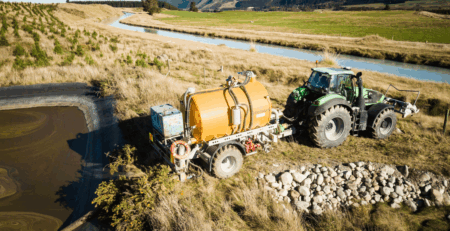
Effluent pond stirring is the mechanical process of blending liquid and solid dairy waste into a uniform, homogenous mixture. For dairy farmers in Ashburton and across Mid Canterbury, this isn’t just a routine maintenance task. It’s the critical first step in a professional dairy farm support plan. By using high-powered mechanical stirrers, you break down the separated layers within a slurry pit or pond to ensure every litre of effluent is consistent. This process represents a fundamental shift in farm management. You’re no longer just managing waste storage; you’re overseeing high-quality liquid fertiliser production. A local ag contractor brings the heavy-duty equipment and technical expertise needed to turn raw organic waste into a nutrient-rich resource that your pasture can actually absorb.
Effective effluent pond stirring NZ wide is a requirement for modern compliance and soil health. When you treat your pond as a fertiliser factory rather than a hole in the ground, the economic benefits become clear. You reduce your reliance on synthetic fertilisers, which can cost upwards of NZ$800 per tonne depending on the blend. By homogenising the pond, you ensure that the nitrogen, phosphorus, and potassium are evenly distributed throughout the liquid. This allows for precise application across your paddocks, ensuring no single area is overloaded while others are under-fed.
The Problem with Crusting and Sludge Build-up
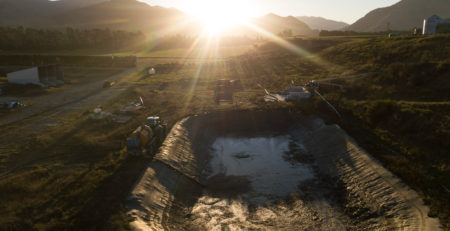
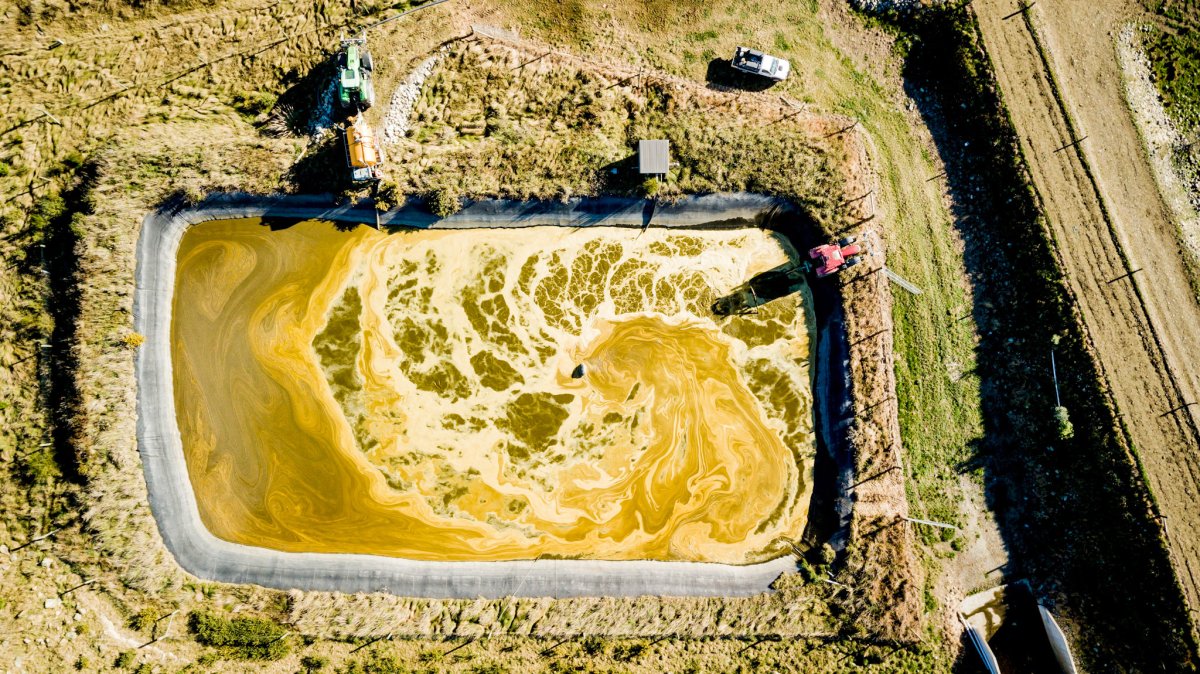
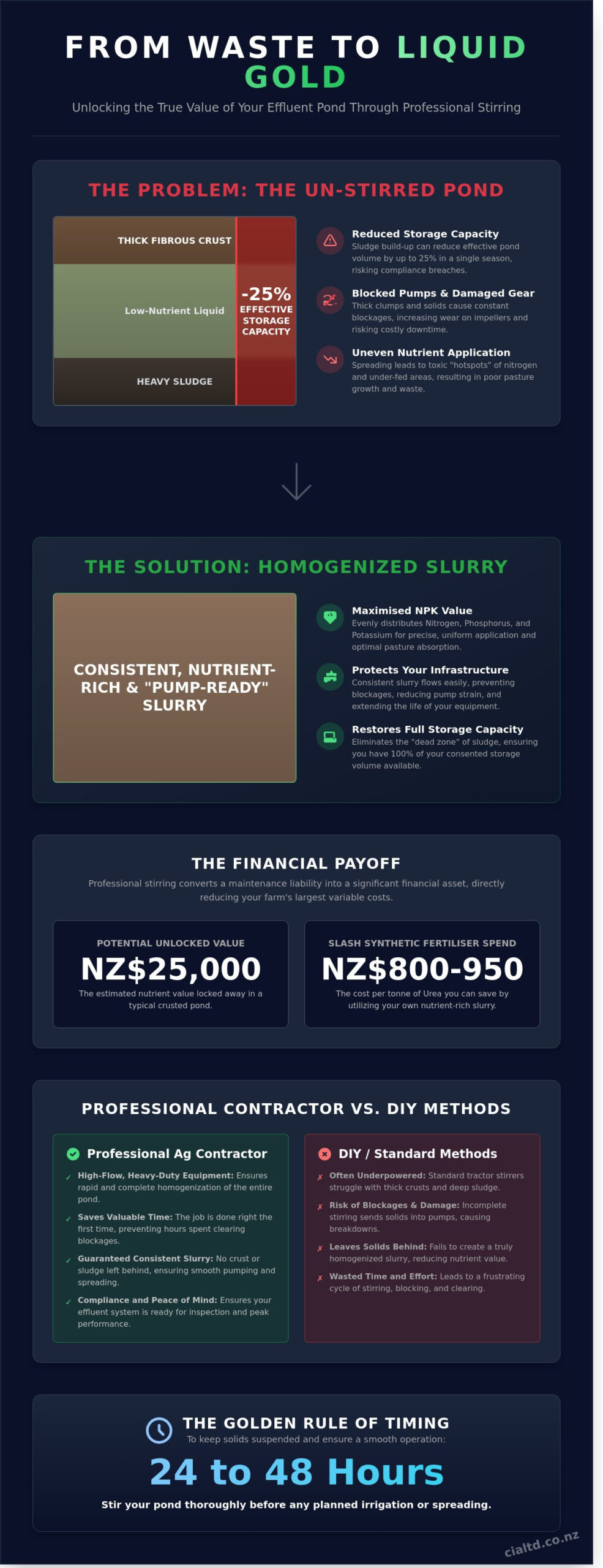
When effluent sits idle, it naturally separates into distinct layers. A thick, fibrous crust forms on the surface, often becoming solid enough for birds to walk on. This crust acts as a lid, trapping gases and nitrogen underneath, which prevents the natural breakdown of solids. Below this crust, heavy sand and organic matter sink to the bottom, creating a “dead zone” of sludge. Over a single 12-month season, this build-up can reduce your effective pond storage capacity by as much as 25%. In Mid Canterbury, where regional councils have strict rules about storage volumes, losing a quarter of your capacity to sludge is a liability. Regular stirring prevents these solids from hardening, maintaining your full storage volume and protecting your infrastructure investment.
Why Stirring is the First Step to Efficient Spreading
You can’t pump what you haven’t stirred. Standard effluent pumps and travelling irrigators are designed to move liquids, not thick clumps of organic matter. Attempting to spread un-stirred effluent leads to frequent blockages, increased wear on pump impellers, and uneven nutrient application. Stirring creates a consistent slurry that flows through pipes and nozzles without hesitation. This “pump-ready” effluent is vital for the high-performance systems used on larger farms in the Ashburton District. It ensures that your irrigation hardware operates at peak efficiency, reducing the man-hours spent clearing blocked lines. Partnering with a reliable agricultural contractor ensures the job is done right the first time, providing a seamless transition from storage to soil.
To get the best results, farmers should aim to stir their ponds at least 24 to 48 hours before planned irrigation. This timeframe allows the solids to stay in suspension long enough for the pump to move them out to the paddock. It’s a straightforward, hardworking approach to farm management that prioritises long-term soil integrity and operational safety.
The Benefits of a Homogenized Slurry: Turning Waste into Liquid Gold
For a dairy farm in Ashburton, effluent isn’t just a byproduct; it’s a significant financial asset. With synthetic urea prices fluctuating around NZ$800 to NZ$950 per tonne over the last 24 months, every cubic metre of pond liquid represents a chance to slash your overheads. Professional effluent pond stirring NZ services ensure that what you spread on your paddocks is a high-value nutrient blend rather than just dirty water. It’s about precision. If the slurry isn’t consistent, your application rates will be wrong. This leads to uneven pasture growth where some areas receive a toxic load of nitrogen while others receive almost nothing at all.
A “get the job done right” attitude is essential when managing these ponds. In Mid Canterbury, where soil types can vary from heavy silt loams to stony ground, the consistency of your application determines your grass yield. By turning thick sludge into a homogenized liquid, you’re ensuring that your irrigator or muck spreader delivers a uniform dose of nutrients across every hectare. This consistency is the foundation of a high-performing farm system. It allows you to trust your data and your grass growth projections without second-guessing the quality of your inputs.
Unlocking Nitrogen, Phosphorus, and Potassium (NPK)
The most valuable nutrients like phosphorus and organic nitrogen often settle into a dense layer of sludge at the bottom of the pond. Without mechanical intervention, you’re only pumping out the nutrient-thin liquid from the top layer. Stirring suspends these solids evenly throughout the liquid. Good effluent management through regular stirring allows for accurate nutrient budgeting. When your NPK levels are consistent, you can calculate exactly how much synthetic fertiliser you don’t need to buy. On a 400-cow farm, this level of accuracy can save a farmer between NZ$5,000 and NZ$12,000 per season in avoided fertiliser costs.
Preventing Pump Blockages and Equipment Wear
Equipment failure is the fastest way to blow a maintenance budget. A pump that burns out because it’s trying to move thick, unstirred sludge can cost a farm upwards of NZ$7,500 for a replacement, plus the cost of emergency call-outs. Grit and concentrated solids act like sandpaper on the internal components of your expensive farm infrastructure. A local ag contractor brings the heavy-duty gear required to break up these crusts before they ever reach your intake. This proactive approach keeps your systems running at 100% capacity during the critical spreading windows. If you want to ensure your infrastructure stays in top shape, it’s worth looking at how a professional dairy farm support team manages these heavy-duty tasks with technical authority.
Beyond the mechanical benefits, homogenized slurry is far better for your soil health. When solids are properly broken down and suspended, they’re more readily absorbed by the soil biology. This prevents the “sealing” effect where thick effluent sits on the surface, blocking oxygen and potentially killing the very grass you’re trying to grow. In Mid Canterbury and North Canterbury, where moisture retention is key, maintaining a healthy soil structure through proper effluent application is a long-term investment. It’s about building a sustainable cycle that turns waste into a bespoke resource for your land.
Reliability in this process is everything. When you hire a seasoned expert, you’re paying for the peace of mind that the pond is stirred to its full depth. This isn’t just about moving the surface water; it’s about deep-set agitation that clears the corners and floor of the pond. This level of craftsmanship ensures that your pond storage capacity is fully utilized, preventing the premature need for expensive pond desludging or expansion projects. It’s a straightforward, hardworking approach to farm management that delivers clear results for the local building and agricultural landscape.
Professional Pond Stirring vs. DIY: Why Hiring a Local Ag Contractor Pays Off
Farmers across Mid Canterbury often face the temptation to manage effluent ponds using existing farm machinery. It seems cost-effective to hook up a basic PTO-driven stirrer and leave it running for a few days. However, effluent pond stirring NZ standards have evolved as pond volumes have increased. Most standard farm-owned stirrers lack the necessary thrust to shift heavy solids that have settled over a long season. This usually results in a “donut effect” where only the liquid directly around the propeller moves, leaving the most valuable nutrients stuck at the bottom.
High-Capacity Machinery vs. Standard Farm Gear
The primary difference between professional gear and consumer units lies in the turnover rate. Commercial stirrers used by a local ag contractor generate significantly higher thrust, which is essential for breaking up thick surface crusts and lifting heavy sludge. If your pond is deeper than 3 metres, standard farm equipment often fails to reach the “dead zones” near the base. At Central Injection Agri, we utilize high-flow, long-reach propellers specifically engineered for the high-solids environment of Ashburton dairy farms. These machines move thousands of litres per minute, ensuring that the entire pond volume is engaged in the mixing process rather than just the top layer.
The True Cost of Inefficient Stirring
Inefficiency carries a heavy price tag that often stays hidden until the fertilizer bill arrives. When a pond isn’t stirred correctly, the liquid being spread is nutrient-poor. You might only be applying 35% of the potential NPK value if the heavy solids remain at the bottom of the pond. Good effluent management requires these solids to be fully suspended so they can be utilized by your pasture.
Consider the operational costs of DIY stirring. Running a tractor for 48 hours to achieve a mediocre mix consumes a significant amount of diesel and adds unnecessary hours to your machinery’s service interval. A professional team can often achieve better results in 4 to 6 hours. Efficient stirring is defined as achieving total pond homogenization in a single session, ensuring every drop spread onto your paddocks carries its fair share of nutrients. This precision saves money on synthetic fertilizers and protects your soil health.
Safety is another critical factor that shouldn’t be overlooked. Operating heavy machinery near soft, saturated pond edges is a high-risk task that requires experience and the right stabilization gear. Our team at Central Injection Agri approaches every job with a safety-first mindset. We pride ourselves on being a dependable dairy farm support partner that understands the local landscape. As a New Zealand owned and operated business, we bring a “get the job done right” attitude to every project in South Canterbury and North Canterbury. We provide the technical expertise and high-capacity equipment needed to turn a potential environmental liability into a high-value liquid asset for your farm.
Planning Your Effluent Management in Mid Canterbury: Timing and Compliance
Effective effluent management in Ashburton isn’t just about moving waste. It’s about precision and foresight. Farmers across Mid Canterbury know that the window for emptying ponds is often tighter than it looks. You need to be ready before the wet winter months arrive, or you risk running out of storage capacity when the ground is too saturated to receive nutrients. Being proactive ensures you maintain the integrity of your storage system while staying on the right side of regional regulations.
Best Times for Stirring in the Canterbury Season
The late summer and autumn months, specifically from February through April, represent the critical window for pond maintenance. Emptying your storage during this period ensures you have the necessary buffer for the high rainfall months of June and July. In North Canterbury and Mid Canterbury, weather patterns shift quickly. Strong Nor’westers dry the soil fast, which creates ideal conditions for spreading, but you must have your solids mixed first. We recommend a “little and often” approach for dairy farm support. For ponds with high solid loading, stirring for 3 to 5 hours every month prevents the heavy crust that makes annual emptying a difficult task. This consistent maintenance keeps the nutrients in suspension, making the final pump-out much more efficient.
Meeting Regional Environmental Standards
Local environmental regulations enforce strict rules to protect our local waterways, especially for farms located near the Rakaia or Ashburton rivers. Compliance means ensuring zero ponding and no runoff into sensitive catchments. Using professional effluent pond stirring NZ services ensures your slurry reaches a consistent, liquid state. This consistency prevents “hot spots” where nitrogen levels might exceed the 150kg/ha limit typically set in regional plans. Professional records are your best friend during a farm audit. Since the 2022 Farm Environment Plan (FEP) updates, 92% of successful audits in the region now include detailed logs of stirring times and application rates. Keeping these records proves you’re managing your nitrogen output with technical authority.
To stay ahead of the peak season, you should follow a disciplined scheduling routine. The demand for a local ag contractor spikes significantly in March, so booking your services 6 to 8 weeks in advance is a smart move. Waiting until the pond is at 90% capacity creates unnecessary stress and limits your options if the weather turns sour. A well-timed stir and empty cycle protects your soil structure and maximizes the dollar value of your effluent.
- Monitor Freeboard: Check your pond levels weekly. Regional rules require a minimum 100mm freeboard at all times to prevent overtopping during storm events.
- Book Early: Schedule your agricultural contractor in January for an autumn empty to beat the March rush.
- Test Nutrients: Analyze your stirred effluent twice a year. Knowing the exact NPK values allows you to reduce your synthetic fertilizer spend by up to 15% on average.
- Equipment Check: Ensure your pond infrastructure is accessible for heavy machinery before the contractor arrives on-site.
As a New Zealand owned and operated partner in the agricultural sector, we understand that reliability is everything. Managing your pond isn’t just a chore; it’s a critical component of your farm’s infrastructure and environmental legacy. By aligning your stirring schedule with the natural Canterbury seasons, you protect your land and your livelihood.
Ready to optimize your pond performance and ensure full compliance? Contact our expert team for reliable dairy farm support today.
How Central Injection Agri Streamlines Your Effluent Management in Ashburton
Central Injection Agri brings a grounded, results-driven approach to every farm gate across Mid Canterbury. We understand that effluent isn’t just a byproduct; it’s a high-value asset that requires precise handling to yield the best return on investment. Our team focuses on reliability and technical excellence, ensuring your storage systems are managed with the care they deserve. By choosing a local ag contractor who understands the unique soil profiles of Ashburton and Methven, you’re investing in a partnership that prioritizes your farm’s long-term productivity. We take pride in our “get the job done right” attitude, which has made us a trusted name in the local agricultural sector.
The real value in our service lies in the synergy between pond stirring and direct slurry injection. Effective effluent pond stirring NZ is the critical first step in this nutrient recovery process. Without a consistent, homogenized mix, application equipment can struggle with blockages or uneven nutrient distribution. We’ve seen nutrient consistency improve significantly when a pond is stirred professionally before application begins. This synergy allows for a seamless transition from the pond to the paddock, making your nutrient management plan more effective and compliant with local regulations. Our process is designed to be steady and methodical, mirroring the logical phases of a successful farming season.
From Stirring to Direct Injection: The Full Service
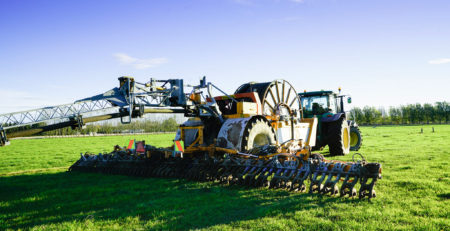
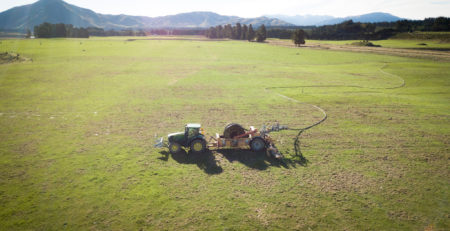
Stirring is only half the battle; precision application is the ultimate goal for any modern dairy farm support service. Our Vervaet self-propelled injectors are designed to work at peak efficiency when handling the homogenized slurry created by our high-powered stirrers. These machines can process large volumes of effluent quickly, but they require a consistent mix to maintain a steady flow rate. Many farmers in the region rely on professional effluent pond stirring NZ to ensure their Vervaet units don’t face downtime due to heavy solids or crusting.
We provide a bespoke service that adapts to your specific pond size and construction. Whether you’re managing a 2,000-cubic-metre lined pond or a larger clay-based storage facility, we adjust our equipment to suit the environment. This tailored approach ensures every litre of effluent is ready for the soil, minimizing waste and maximizing the uptake of nitrogen and phosphorus. Our technical authority in this space means we don’t just move liquid; we manage nutrients with surgical precision. We use functional logic to link our technical capabilities directly to your project outcomes, ensuring a high standard of safety and performance on every job.
Book Your Next Stirring Job with a Local Expert
Whether you’re operating a dairy unit in Timaru, a cropping farm in Rangiora, or a run-off in Oxford, our team is ready to assist. As a 100% New Zealand owned and operated partner, we take pride in supporting the local agricultural sector with high-quality machinery and expert operators. We don’t just show up to stir; we provide a comprehensive service that views your effluent system as a vital part of your farm’s infrastructure. Our reputation as a dependable agricultural contractor is built on delivering results that stand up to scrutiny.
Experience the Central Injection Agri difference by working with a team that values relationships as much as results. We’re committed to helping you achieve a seamless transition from storage to soil, maximizing your nutrient value while maintaining the highest environmental standards. Our communication is straightforward and honest, reflecting the hardworking nature of the Mid Canterbury community we serve.
Contact the team at Central Injection Agri today for a quote on your pond stirring. Our experts are available to discuss your specific requirements and help you plan a more efficient effluent management strategy for the coming season. Don’t leave your nutrient value to chance; partner with a local expert who understands the Ashburton landscape inside and out.
Secure Your Farm’s Nutrient Future Today
Effective effluent management isn’t just about meeting regional council rules; it’s about reclaiming the hidden value in your waste. By investing in professional effluent pond stirring NZ, you ensure that every cubic metre of slurry spread across your Mid Canterbury paddocks contains a consistent blend of nitrogen and phosphorus. This process eliminates the thick crust and heavy solids that often reduce a pond’s working volume by up to 30%, giving you back the storage space you need during wet periods.
Central Injection Agri provides the specialized high-capacity stirring equipment required to homogenize even the most stubborn ponds. As a local ag contractor that’s been NZ owned and operated since our inception, we pride ourselves on being a reliable partner for Ashburton dairy farmers. We focus on technical precision and hard work to deliver results that help your pasture thrive. Our commitment to Stirring, Management, and Nutrient Recovery ensures your farm operates at its peak potential.
Get your pond pump-ready, contact Central Injection Agri for expert stirring services
Properly stirred effluent is liquid gold for your soil. We look forward to helping you maximize your farm’s productivity this season.
Frequently Asked Questions
How long does it take to stir a standard effluent pond?
Most standard 1.5 million litre ponds take between 2 and 4 hours to reach a homogenous consistency ready for spreading. If your Mid Canterbury farm has a crust thicker than 500mm, expect the process to take closer to 6 hours. Consistent effluent pond stirring NZ ensures nutrients stay suspended, allowing your pump to move the slurry without blockages or mechanical strain.
Will pond stirring help reduce the smell during spreading?
Stirring significantly reduces the intensity of odors by oxygenating the effluent and breaking down anaerobic pockets before spreading. When you use a local ag contractor to thoroughly mix the pond, you decrease the release of volatile hydrogen sulfide gases by up to 40 percent. This makes the application process more neighbor-friendly across Ashburton and the wider Mid Canterbury plains.
Can you stir a pond that has a synthetic liner?
You can safely stir a pond with a synthetic liner provided you use a stirrer equipped with a protective frame or a floating unit. These specialized tools prevent the blades from making contact with the HDPE or PVC material. Our dairy farm support teams prioritize safety, ensuring the 1.5mm liner remains intact while achieving a full mix that protects your infrastructure investment.
How often should I stir my effluent pond if I am not spreading yet?
We recommend stirring your pond every 60 to 90 days even if you aren’t currently spreading to prevent the solids from hardening. A thick crust can become a 1 meter deep layer of compacted organic matter that is difficult to break later. Regular maintenance keeps the effluent fluid, which saves you roughly 25 percent in fuel and labor costs when it’s time to empty the pond.
What is the difference between a shore-based stirrer and a floating stirrer?
A shore-based stirrer is typically a tractor-driven prop that reaches into the pond from the bank, making it ideal for smaller, accessible pits. In contrast, a floating stirrer sits on pontoons and moves across the surface, which is better for large 5 million litre ponds or those with steep, lined banks. Floating units provide more consistent coverage in deep corners where shore-based reach might fail.
Do I need to do anything to prepare my pond before the contractor arrives?
Ensure there’s a clear, stable access track at least 4 meters wide for the ag contractor to position their machinery safely. You should also remove any large debris or loose fence wire from the pond edges that could tangle in the 600mm prop blades. Providing a clear workspace allows the team to start immediately, reducing the hourly billable time for your Ashburton property.
Is pond stirring necessary if I have a solids separator?
Stirring remains a critical task because even the most efficient solids separators only remove about 15 to 20 percent of the total suspended solids. The remaining fine particles eventually settle at the bottom of your Mid Canterbury pond, creating a sludge layer that reduces storage capacity. Regular effluent pond stirring NZ prevents this buildup and ensures the high-value liquid nutrients are distributed evenly across your pasture.
How much does professional effluent pond stirring cost in Mid Canterbury?
Professional effluent pond stirring in the Mid Canterbury region typically costs between NZ$180 and NZ$250 per hour, depending on the machinery required. Most local ag contractors have a minimum call-out fee or a base rate for the first two hours of work. For a standard dairy farm support visit, you should budget approximately NZ$500 to NZ$800 to achieve a complete, high-quality mix.